
Your Boston Shaker Is About to Become Your Favorite Bar Tool.

The Boston shaker is the industry standard for a reason. We'll show you how to seal it, shake it, open it, and make incredible cocktails with confidence.

Bartender demonstrating a Boston shaker technique at the bar A Bar Above bartender holding a Boston shaker, from the 2-minute how-to guide video

Watch This Before Making Your First Cocktail.

If you've never used a Boston shaker before, we're here to walk you through all the steps.

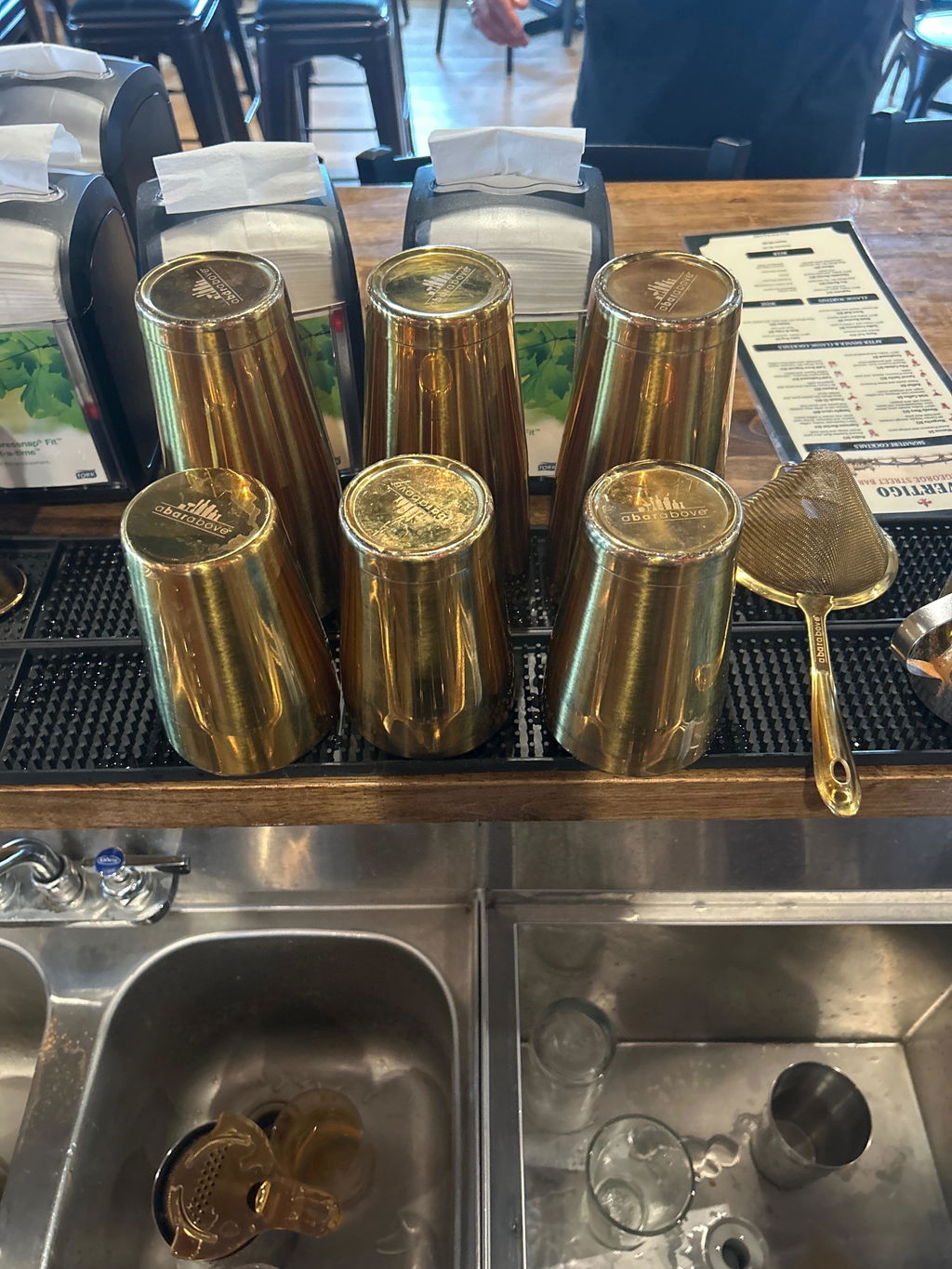
Meet Your Boston Shaker labeled diagram: small weighted tin, large weighted tin, and the circle-welded weight

Why Are the Tins Weighted or Unweighted?

What do "weighted" and "unweighted" mean?

The "weight" is a small piece welded into the tin's base, but it doesn't add much heft. Its real job is to stiffen the tin, and that rigidity helps it hold its shape and seal cleanly. An unweighted tin is thinner and more flexible.


Which should I pick?

For most people, weighted/weighted. It's the best balance of a watertight seal and easy opening.


Which is better for a beginner?

Also weighted/weighted, for that same balance. It's the most forgiving to learn on. Weighted/unweighted seals tighter, which is better if you make a lot of foam or egg-white drinks or you're an advanced bartender, but it takes more practice to open.

How to Use a Boston Shaker

Adding ingredients to the smaller tin

Step 1: Add Ingredients

Add your spirits, juices, and other liquid ingredients to the smaller tin first. Save the ice for last, right before you build the seal, so it isn't sitting around diluting your drink while you're still measuring everything else out.

Step 2: Seal the Shaker

Place the larger tin on top of the smaller one at a slight angle, then give it a gentle tap on top with the heel of your hand. That locks the two tins together into a tight, leak-proof seal. You don't need much force; a firm tap is plenty.

Sealing the two tins together

Step 3: Shake

Grip both tins firmly and shake hard for about 10 to 15 seconds. You want the whole shaker moving so the ice chills and dilutes your drink evenly. When the outside frosts over, it's ready to strain.

Step 4: Open the Shaker

Hold the side where the tins are “bending” into each other, and hold them with your thumb, pointer, and ring fingers. Find the frosted seal point on the other side, and give it a good smack with your palm to open the shaker.

Opening a Boston shaker by striking the seam with the palm to release the seal
Straining a cocktail through a Hawthorne strainer from a Boston shaker tin into a coupe glass

Step 5: Strain

Set a Hawthorne strainer over the mouth of the larger tin, holding it in place with your first two fingers while you grip the tin. Then pour steadily into your glass. The strainer holds back the ice and any solids, so only the drink makes it through.

The Secret to Opening a Boston Shaker

Most first-time users try pulling the tins apart. Do this instead:

  1. Find the seam.
  2. Hold the tins with one hand.
  3. Locate the widest point.
  4. Strike the side with your other palm to release the seal.
A Bar Above bartender demonstrating how to open a stainless steel Boston shaker

Try These Recipes with Your New Shaker

Classic Daiquiri

Classic Daiquiri

Chocolate Martini

Chocolate Martini

Cosmopolitan

Cosmopolitan

• • •

Frequently Asked Questions

Why won't it seal?

A Boston shaker seals best when the smaller tin sits inside the larger tin at a slight angle. Give the larger top tin a firm tap with the palm of your hand to create the seal; it doesn't take much force. If the tins are perfectly straight when you push them together, they may not lock properly. A slight angle is the secret.

Why won't it open?

This is one of the most common questions. As you shake, the cold causes the metal to contract slightly, creating a tight seal. Instead of pulling the tins apart, find the point where the rims meet, as indicated by a line of frost. Give the side of the larger tin a firm tap with the palm of your hand. The seal should pop open. If it's especially stubborn, running warm water over the outside of the larger tin for a few seconds usually does the trick, but you don't want to heat up your cocktail, so don't run the whole shaker under, and don't do this for too long.

Is this dishwasher-safe?

Absolutely! Your Boston shaker is made from professional-grade stainless steel and is completely dishwasher-safe. If you want to keep it looking its best for years to come, hand washing and drying it promptly can help minimize water spots, but either method works great.

Why doesn't it include a built-in strainer?

That's by design. Boston shakers are meant to be used with a Hawthorne strainer, which gives you much more control over your pour and does a better job filtering out ice and larger ingredients. It's one of the reasons professional bartenders prefer this style of shaker.

What's the difference between weighted/weighted and weighted/unweighted shakers?

Both styles work beautifully and make excellent cocktails. A weighted/unweighted shaker pairs one weighted tin with one lighter tin, while a weighted/weighted shaker uses two weighted tins for a more balanced feel. Many people appreciate the extra heft and durability of two weighted tins, plus this combo tends to offer more flexibility for opening. Meanwhile, other bartenders prefer the lighter feel and more rigidity of a weighted/unweighted set. There isn't a “right” choice: it's all about which one feels better in your hands.

Can I shake egg white cocktails?

Absolutely! In fact, Boston shakers are a favorite for cocktails that use egg whites or aquafaba because they provide plenty of room to build a rich, silky foam. For best results, many bartenders use a dry shake (without ice) first before adding ice and shaking again.

Can I use it for mocktails?

Definitely! Boston shakers work just as well for mocktails, fresh juices, iced teas, lemonades, and other non-alcoholic drinks. Any time you want to chill ingredients quickly while adding a little dilution and aeration, a Boston shaker is the right tool for the job.

Why does the outside frost over?

That's science doing its thing. As you shake, the ice rapidly chills the stainless steel. Moisture in the surrounding air condenses on the cold surface and freezes, creating that frosty exterior. It's a good sign that your cocktail is getting ice cold.

More Cocktails? Yes Please!

Sign up for our email list to get bartender-approved recipes with videos, technique tips, and first access to new products and promos.